

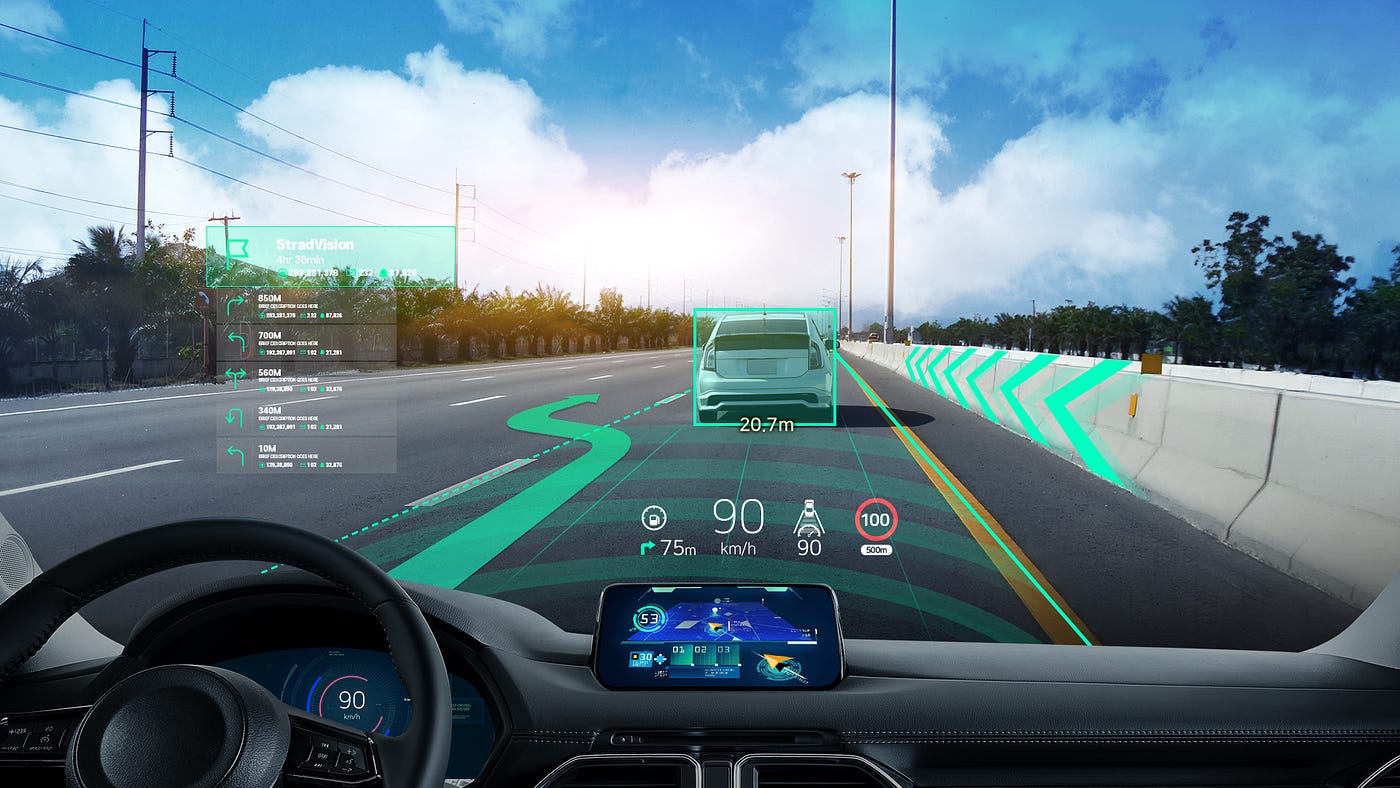
Modern vehicles are evolving from simple transportation machines into advanced digital platforms. One of the most transformative innovations shaping this shift is Augmented Reality (AR) in automotive displays. By overlaying digital information directly onto the driver’s real-world view, AR systems help improve navigation, safety, and overall driving experience.
Automotive manufacturers are increasingly integrating AR technologies into head-up displays (HUDs), dashboards, and infotainment systems. These systems project contextual information such as navigation arrows, hazard alerts, and speed limits onto the windshield or display screen, allowing drivers to keep their eyes on the road.
As vehicles move toward autonomous and connected mobility, AR displays are becoming an essential part of the modern automotive ecosystem.
Understanding Augmented Reality in Automotive Displays
Augmented Reality (AR) refers to a technology that superimposes digital elements—graphics, text, or animations—onto the real-world environment in real time.
In the automotive sector, AR is typically implemented through head-up displays (HUDs) or advanced dashboards that project information directly into the driver’s line of sight.
Key Characteristics of Automotive AR Displays
- Real-time data overlay: Displays information aligned with the physical environment.
- Context-aware guidance: Navigation instructions appear directly on the road view.
- Minimal driver distraction: Information is placed within the driver’s natural viewing angle.
- Enhanced situational awareness: Alerts for pedestrians, vehicles, and road hazards.
Unlike traditional dashboard displays that require drivers to glance away from the road, AR displays integrate critical driving data seamlessly into the driving scene.
How AR Automotive Displays Work
AR automotive displays combine several advanced technologies to generate accurate visual overlays.
Core Technologies Involved
1. Sensors and Cameras
Vehicles use multiple sensors such as cameras, LiDAR, radar, and GPS to monitor surroundings and determine the car’s precise position.
2. Data Processing Units
Powerful onboard processors analyze real-time data and determine what information should be displayed to the driver.
3. Projection Systems
The information is projected onto the windshield or display surface through head-up display projectors or waveguide optics.
4. Computer Vision
Computer vision algorithms detect objects such as road lanes, traffic signs, or nearby vehicles and align digital graphics accordingly.
Together, these technologies create dynamic, context-aware overlays that appear anchored to real-world objects.
Types of Augmented Reality Automotive Displays
1. Head-Up Displays (HUDs)
HUDs project essential information onto the windshield within the driver’s field of vision.
Common HUD features include:
- Speed indicators
- Navigation arrows
- Lane guidance
- Collision warnings
- Speed limit notifications
Advanced AR HUDs can project graphics several meters ahead of the vehicle, making navigation cues appear as if they are actually on the road.
2. AR Navigation Systems
AR navigation systems enhance traditional navigation by displaying directional arrows directly on the road view.
For example:
- Turning arrows appear at intersections
- Highlighted lanes guide the driver through complex junctions
- Destination markers appear over buildings or parking areas
This reduces confusion in unfamiliar locations and improves navigation accuracy.
3. AR Instrument Clusters
Digital instrument clusters with AR capabilities combine traditional dashboard information with contextual overlays.
Drivers can view:
- Vehicle diagnostics
- Road hazard alerts
- Advanced driver assistance system (ADAS) warnings
- Adaptive cruise control visuals
4. Passenger AR Displays
Some luxury vehicles are introducing AR displays for passengers, integrated into infotainment systems or smart windows.
These systems can provide:
- Interactive entertainment
- Travel information about landmarks
- Real-time trip visualization
Benefits of Augmented Reality in Automotive Displays
Improved Driving Safety
One of the primary benefits of AR automotive displays is enhanced driver awareness.
Drivers can receive critical alerts such as:
- Collision warnings
- Pedestrian detection
- Blind-spot alerts
- Road hazard notifications
Since the information appears directly within the driver’s field of vision, reaction time improves significantly.
Reduced Driver Distraction
Traditional displays force drivers to look away from the road to check navigation or vehicle data.
AR displays solve this problem by presenting information in the driver’s natural line of sight, reducing cognitive load.
Enhanced Navigation Experience
AR navigation is far more intuitive than traditional maps.
Instead of interpreting directions from a 2D screen, drivers can simply follow visual cues placed on the road itself.
Better Situational Awareness
AR systems can highlight:
- Lane boundaries
- Traffic signs
- Vehicles ahead
- Pedestrians crossing
This helps drivers better understand complex traffic situations.
Support for Advanced Driver Assistance Systems (ADAS)
AR displays are closely linked with ADAS technologies, providing visual feedback for systems such as:
- Adaptive cruise control
- Lane keeping assistance
- Automatic emergency braking
Challenges in Implementing AR Automotive Displays
Despite its advantages, implementing AR displays in vehicles presents several technical challenges.
Display Alignment Accuracy
For AR overlays to appear realistic, they must align perfectly with real-world objects. Even minor misalignment can cause confusion or distraction.
Cost and Hardware Complexity
High-quality AR displays require advanced optics, powerful processors, and multiple sensors, increasing manufacturing costs.
Environmental Limitations
Weather conditions such as fog, rain, or glare may impact camera visibility and display clarity.
Driver Information Overload
Too much information on the windshield can overwhelm drivers. Designers must carefully balance useful data with minimal visual clutter.
Real-World Applications in Modern Vehicles
Several automotive manufacturers are already deploying AR display technology in production vehicles.
Common Implementations
- AR navigation in premium vehicles
- Large augmented head-up displays
- AR-enhanced parking assistance
- Driver assistance visualization
Some next-generation vehicles also combine AR displays with AI-powered perception systems, creating smarter driver interfaces.
The Future of Augmented Reality in Automotive Displays
The future of automotive AR displays is closely tied to the development of autonomous driving and connected vehicles.
Emerging Trends
1. Full Windshield AR Displays
Future cars may turn the entire windshield into a large AR interface, providing immersive navigation and hazard visualization.
2. AI-Driven AR Interfaces
Artificial intelligence will personalize AR displays based on driver behavior and driving conditions.
3. Integration with Smart Cities
AR displays could connect with smart traffic infrastructure, displaying real-time traffic signals, construction alerts, and route optimization.
4. AR for Autonomous Vehicles
In autonomous vehicles, AR displays may help passengers understand vehicle decisions, routes, and surroundings, improving trust in automated systems.
Conclusion
Augmented Reality in automotive displays represents a major step forward in human-machine interaction within vehicles. By merging digital data with the real-world driving environment, AR systems improve safety, navigation, and driver awareness.
Although challenges such as cost, alignment accuracy, and display complexity remain, ongoing advancements in AI, sensors, and display technologies are rapidly improving AR automotive systems.
As the automotive industry continues evolving toward connected, intelligent, and autonomous mobility, AR displays are likely to become a standard feature in future vehicles.
FAQ
1. What is an AR head-up display in cars?
An AR head-up display projects digital information such as navigation directions and safety alerts onto the windshield so drivers can see them without looking away from the road.
2. How does AR navigation improve driving?
AR navigation places visual arrows and guidance directly on the road view, making directions easier to understand and reducing confusion at intersections.
3. Is augmented reality in cars safe for drivers?
When designed correctly, AR displays improve safety by keeping drivers’ eyes on the road and highlighting hazards in real time.
4. Do all cars have AR displays?
No. AR displays are currently available mostly in premium or high-end vehicles, although the technology is gradually expanding to more affordable models.
5. What technologies support AR automotive displays?
AR displays rely on sensors, cameras, GPS, computer vision, powerful processors, and specialized projection systems.
6. Can AR displays work in all weather conditions?
Performance may be affected by heavy fog, rain, or glare because these conditions can impact sensor accuracy and display visibility.
7. Will AR displays become standard in future vehicles?
As costs decrease and technology improves, AR displays are expected to become common features in next-generation smart and autonomous vehicles.